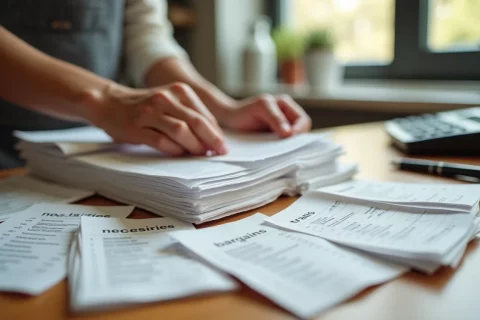

I sat down with my bank statements and a cup of coffee last Tuesday night, determined to answer a question that had been nagging me since January. If someone had asked what I spent on my daughter’s schooling this term, I would have said the annual fee divided by four, plus maybe a few hundred rand for extras. I was wrong by thousands.
Stats SA put the average tuition hike at 5.4% for 2026. Private secondary schools climbed even steeper. Those numbers made the news. Nobody measures everything else, because the quoted annual fee omits many costs. It does not include the uniform she outgrew by March, the scientific calculator that vanished during break, the petrol for three weeks of detours when the school bus broke down, or the WhatsApp message that arrived at 8:47 pm on a Sunday: “Mama, I need a Roman costume for tomorrow.”
I decided to track every rand. Not the big ticket items I already knew about. Every R30 civvies day, every R150 workshop, every panicked Spar run for poster board. One full term. The total stopped being funny around week six.
The diary method
I kept a notes app open on my phone. The rule was simple: if school caused me to spend money, it went in. I made no moral judgments about whether the expense was justified and did not pretend that “optional” meant free.
The first surprise was frequency. By the end of week two, I had seventeen separate entries. Seventeen. I had budgeted for one tuition debit order and maybe a stationery top-up. Instead I was bleeding small notes and SnapScan pings across every day of the week.
R45 for a replacement tie because the original got caught in a locker door. R120 for a “voluntary” contribution to the spring fundraiser that carried enough social pressure to feel like a summons. R280 for swimming goggles after the coach insisted the supermarket pair was inadequate. R30 for civvies day, then another R30 for civvies day with a colour theme, then a frantic R89 at PEP because nothing in her wardrobe was sufficiently green.
The costume and other indignities
The Roman costume arrived as a voice note, breathless and apologetic, while I was folding laundry and contemplating an early night. Toga. Laurel wreath. Sandals. By morning.
I am not complaining about school projects. I love that my child learns history through doing. I do not love that the doing always requires a Shoprite run at closing time, or that the R340 I eventually spent on safety pins, white sheet fabric, and craft foam could have been three prepared dinners.
That costume now lives in a cupboard next to the heritage day outfit, the book week character ensemble, and the sports day house colour accessories. Each represents a single evening of creative panic and a receipt I did not budget for.
The research on school costs talks about predictable categories: uniforms, stationery, technology, transport. My diary revealed something more insidious. The predictable costs were merely the foundation. The real weight came from requests that could not be predicted because they did not exist until they did. A novel required with three days’ notice. A bake sale contribution announced after supper. A tour deposit due Friday that was mentioned in a newsletter I never received because it went to my ex-husband’s email.
What the numbers actually said
I will not pretend my situation is universal. Every school is different, every child is different, every family’s buffer is different. But this is what one term cost me beyond tuition.
The transport column hurt most in hindsight. I had calculated school bus fees into my annual plan. I had not calculated the mornings the bus left early without her, the afternoons she stayed for netball practice, the Saturdays I drove across town for a match that finished three hours after it was supposed to. Fuel for school-related transport came to R1,840. That is not a small rounding error; it is a month’s groceries for some families.
Technology costs appeared twice. First, the tablet repair after a backpack incident I still do not fully understand. Second, data. The school assumes connectivity at home for assignments. My home has connectivity because I pay for it. Nobody mentions that when they list the annual fee.
Sports equipment totalled R670. Not the big stuff, the hockey stick and kit bag I knew about in January. The replacement mouthguard. The socks with the specific stripe. The contribution to the coach’s end-of-term gift that every other parent seemed to know about except me.
Photographs arrived as a printed order form with a deadline. R450 for a package I felt guilty declining because my mother still frames these things. Fundraising raffle tickets. A workshop on study skills that sounded useful and probably was. The cumulative total of “small” requests between R30 and R150 came to R2,340. I read that figure three times. It did not change.
The psychology of being constantly surprised
I am not bad with money. I run a small creative business. I understand cash flow, irregular expenses, and building buffers. What I had not understood was how thoroughly school would erode my sense of control.
Sunday evening requests create a particular stress. The week has not yet begun, your money is already allocated, and suddenly you are scrambling. The scramble itself costs: the convenience store instead of the supermarket, the express delivery fee, the “that’ll do” purchase because proper sourcing requires time you do not have.
Each individual expense is defensible. Most are even valuable. The problem is the aggregation and the unpredictability. My monthly budget has a line for school. It was exhausted by week three of every month. The remaining days I borrowed from groceries, from the emergency fund, from the tax provision I keep telling myself I will not touch.
I spoke to another mother at netball, tentatively, not wanting to sound like I was complaining about opportunities my child was lucky to have. She laughed, bitter and immediate. “I stopped checking my account during term time,” she said. “I just pay and pray.” I recognised that. The prayer is not for abundance; it is for the term to end before the money does.
What careful budgeting misses
The annual fee seduces us into thinking education is a known quantity. Divide by twelve, set the debit order, move on. The reality is a thousand tiny negotiations between what the school requests and what you can refuse without your child paying a social cost.
I could have said no to the photographs. I could have sent her in a sheet and called it a toga. I could have ignored the raffle tickets and the study workshop and the house colour accessories. Some parents do. I am not judging them and I am not judging myself for saying yes. I am noting that the system is designed so that “no” requires active resistance, and active resistance is itself a cost in energy and awkwardness that busy parents rarely have spare.
Stats SA will track tuition again next year. The figure will rise, we will grumble, we will adjust. Nobody will measure the R30 and R150 payments. Nobody will count the Sunday evenings. My diary sits in my phone as a private document of how thoroughly the quoted price failed to quote my life.
I am not asking schools to change. I am not demanding free costumes or abolished civvies days. I am saying that the financial reality of South African schooling, for families like mine, involves a constant low-grade hemorrhaging that the headline figure conceals. Knowing this does not fix it. But for me, tracking it helped. At least now when I feel ambushed, I know I am not imagining things. The money is real. The frequency is real. The surprise, at least, I can stop pretending about.