
The maths never works until you actually do it. For months I’ve had a corner of my garage stacked with things I swore I’d fix “when I had a weekend,” a graveyard of good intentions and dodgy glue. The kettle that doesn’t switch off. The chair from ouma’s house that rocks on two legs. A denim jacket I’ve owned since before my divorce, held together by memory more than thread.
Last month I finally snapped. Not in a zen way. I was staring at a R1,200 cart on Takealot for things I already owned, just broken, and I thought: this is stupid. So I pulled five items out of storage and made a rule. I would attempt to repair each one. I would track every rand and every hour. And I would be brutally honest about whether I was saving money or hoarding sentiment.
The chair that outlasted three governments
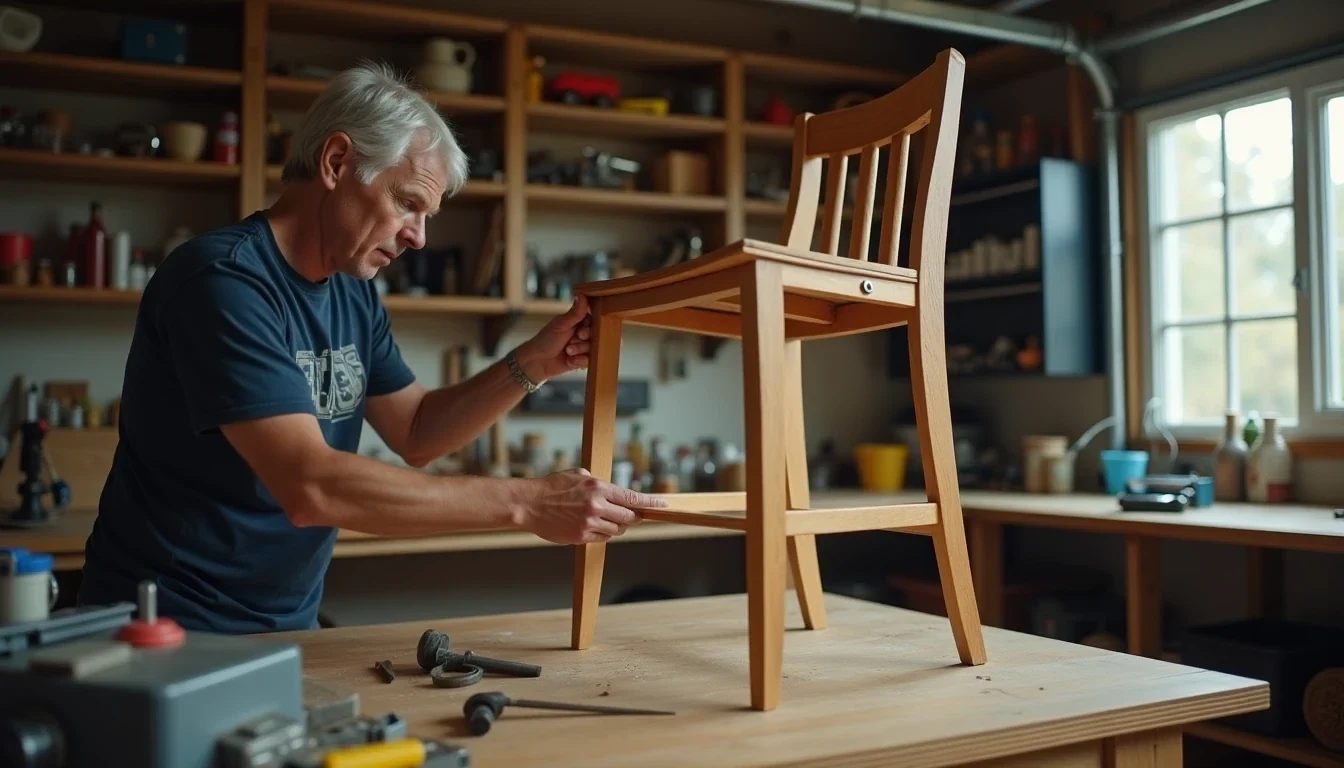
Ouma’s dining chair wobbled like a table at a pavement café. Loose joints, a scratch across the seat deep enough to catch your nail, wood dry as the Karoo. I bought wood glue, sandpaper, filler, and a tin of polish from Builders Warehouse for R148. It took me five hours across two days, mostly waiting for glue to set. The disassembly was satisfying, old joinery, no screws, just craft. The reassembly was fiddly. I clamped it wrong twice.
A new solid wood chair from somewhere like Decofurn runs R800 to R1,500. The cheap flat-pack options at R300-R600 aren’t worth comparing; they won’t see out the decade. My repair cost R148 and an afternoon. The chair will outlast me. This one was an obvious success.
The kettle that taught me about false economies
My Russell Hobbs kettle, three years old, had developed a death wish. It boiled fine, then kept boiling, which was dangerous. I looked up the thermostat switch, R120 from an electrical supply place in Randburg. It took ninety minutes to disassemble, diagnose, and replace. This required a screwdriver set I already owned and a YouTube video made by a man in Bloemfontein who films repair tutorials in Afrikaans.
A new basic kettle starts at R150. A decent replacement like mine runs R400-R800. My repair cost R120 and under two hours. However, if I hadn’t found that part, or if the element had gone too, I’d have been stuck. Small appliance repair infrastructure in this country is basically gone. Most electricians want R300-R500 just to look, which makes repair economically irrational for cheap items. I got lucky. I won’t count on luck again.
The jacket that knows too much
My denim jacket, Levi’s, bought in 2012, worn through a marriage, a miscarriage, two jobs, and the pandemic, tore along the sleeve seam and lost its zipper pull. New thread, a replacement pull, and a careful hour of hand-stitching cost R52. A new Levi’s jacket runs R1,200-R1,500 now. The fast-fashion alternatives at R250-R450 fall apart in a year.
I need to be honest. The repair was trivial. The hard part was admitting I’d kept it unworn for eighteen months because fixing it felt like admitting time had passed. I repaired it on a Sunday afternoon and wore it to the shops on Monday. A woman asked where I got it. “It’s older than your car,” I said. It was worth it, not for the maths, but for the wearing.
The hose reel that broke my heart
Five years of Joburg sun and this plastic hose reel cracked right through the winding mechanism. I tried plastic epoxy, sanding, even a metal brace. Materials cost R176. It took three hours including curing time. It worked for four uses, then cracked elsewhere.
A replacement costs R200-R400 for the same rubbish, or R500-R900 for something with actual metal parts. I bought the mid-range replacement. Some things are designed to die. The repair taught me that lesson for R176 and false hope. I don’t regret trying. I regret that trying was doomed.
The lamp that wasn’t about the lamp
My bedside lamp, with a ceramic base and fabric shade, was a gift from my husband before he was my ex-husband. It stopped working. A new bulb didn’t help. I bought a switch and rewired the plug for R78. It took an hour with a multimeter I borrowed from my neighbour.
A new lamp starts at R100. A nice one runs R300-R700. The repair was cheap and simple. But I need to name this: I kept that lamp for two years broken because fixing it felt like keeping him, and throwing it away felt like bitterness. The repair cost R78. The emotional labour of deciding to repair it cost more. It’s a good lamp. It works. I don’t know if I’ll keep it.
What the numbers actually say
| Item | Repair Cost | Replacement Cost | Hours | Verdict |
|---|---|---|---|---|
| Chair | R148 | R800-R1,500 | 5 | Repair, obviously |
| Kettle | R120 | R400-R800 | 1.5 | Repair, but fragile |
| Jacket | R52 | R1,200-R1,500 | 1 | Repair, for love |
| Hose reel | R176 | R500-R900 | 3 | Replace, sadly |
| Lamp | R78 | R300-R700 | 1 | Repair, then decide |
Total spent on repairs: R574. Total replacement cost if I’d bought new equivalents: roughly R2,500-R4,200. Time invested: eleven and a half hours.
The thing nobody prices
I started this thinking I’d learn about money. I learned about time and honesty instead. Two repairs were clear wins. One was a win built on luck and disappearing infrastructure. One failed because plastic in the sun has a lifespan and manufacturers know it. And one, the lamp, maybe the jacket too, was never about the object.
The trend pieces call this “the repair movement” like it’s a lifestyle choice. For most of us, it’s just Tuesday. Wages are flat, prices are up, and that thing you bought five years ago now costs double to replace. The environmental angle is real but secondary. You don’t repair a kettle to save the planet. You repair it because R120 beats R600 and you’ve got an afternoon free.
What I’m keeping: the chair, the jacket, the repaired kettle with one eye on its eventual death. What I learned: some objects carry weight they shouldn’t, and fixing them doesn’t always lighten the load. The hose reel went to the bin with my illusions. The lamp sits on my bedside table, working, waiting for me to decide if light is enough.