

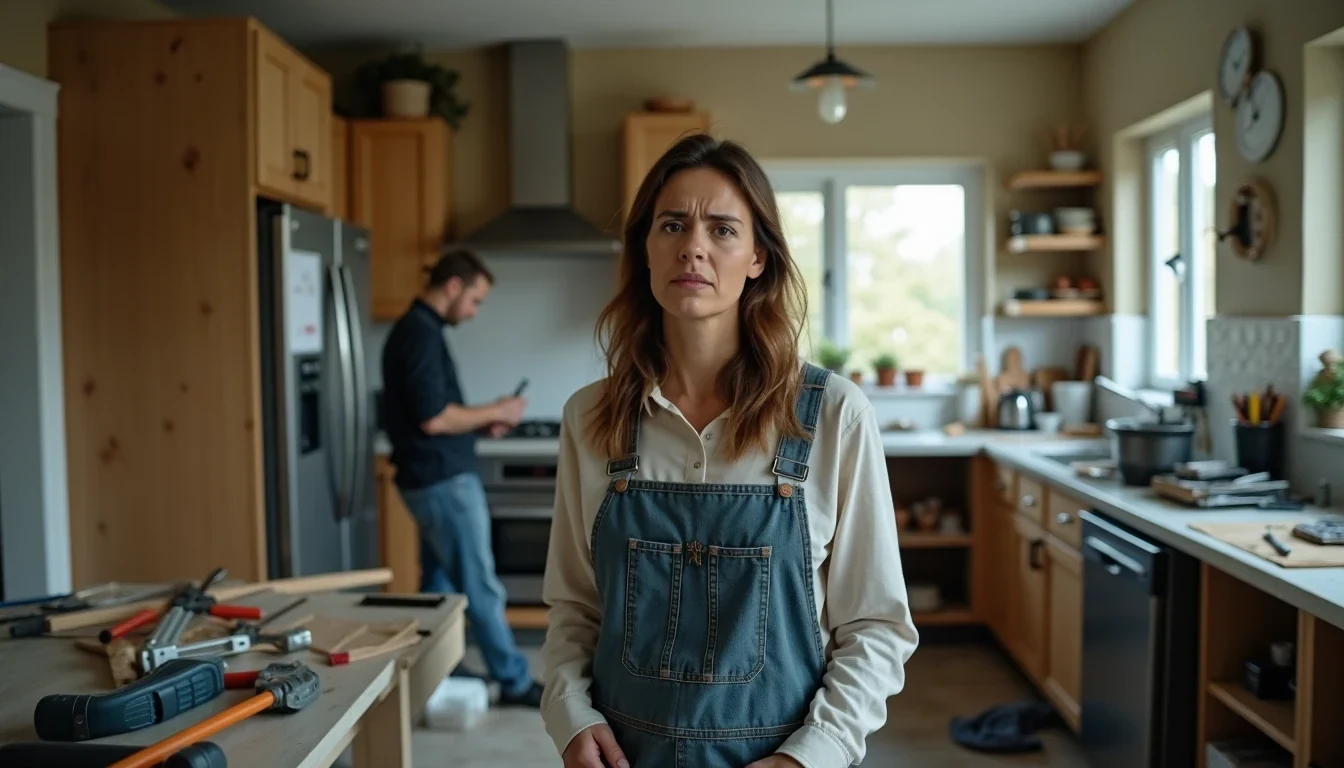
The first time I commissioned something custom, I learned very quickly that a pretty sketch is not the same thing as a finished piece in your house, on your floor, under your lousy kitchen light, with a child asking where the cereal went. The real work starts long before delivery day, and it has a lot more to do with people than wood.
Nobody tells you this when you are staring at samples and trying to imagine what the final piece will feel like in real life. Good custom work can make a room sing. Bad custom work can turn a simple project into a slow, expensive grudge match.
The maker is part of the product
People like to talk about finish, colour, hardware and dimensions, because those are the shiny bits. I’ve found the relationship behind the work usually decides whether you sleep well or refresh your messages every hour like a fool.
A maker who has done similar jobs before is safer than one who only has enthusiasm and a nice Instagram feed. A workshop that handles one-off residential pieces may be perfectly fine for a single dining table, then fall apart when asked to deliver a larger hospitality order with a hard deadline. I’d rather see proof of a comparable job than a dramatic promise.
Custom kitchen design becomes less about cupboards and more about trust. The kitchen is the budget, the schedule, the plumber, the tiles, the electrician, and one exhausted woman trying to keep the whole thing from drifting into chaos.
The portfolio should match the job in front of you. If you need residential joinery, look for residential joinery. If you need a guesthouse fit-out, or a restaurant run of pieces, or a studio full of built-ins, ask for work that lives in that same world. Woodgrain Design says its portfolio stretches from private homes to luxury safari lodges, boutique hotels and restaurant groups across 12 countries, with jobs ranging from single bespoke dining tables to 200-chair hospitality installations. This tells me they understand scale, and scale is where a lot of smaller makers wobble.
Paper saves arguments
I have no patience left for verbal promises in business. People say all sorts of charming things before you pay the deposit. Then the weeks pass and suddenly everyone has “had a bit of a delay.”
Lead time is where the romance ends. It is also the place most projects get scratched up first. Designers complain about it because their whole schedule depends on it, and home owners complain about it because they are the ones standing in a half-finished room with a kettle on the floor.
If a maker will not put the lead time in writing, I would treat that as a warning. If they do not want to send a proper specification sheet, I would treat that as a bigger one. I want dimensions, materials, tolerance ranges and lead times in a document that can go straight into a project file without needing a rewrite from me. Not a vague WhatsApp message. Not a memory. Not a “we should be fine”.
That document separates a supplier from a proper collaborator. It also prevents that deeply annoying moment when the final piece arrives and everyone acts surprised that it is 30mm taller than planned, as if numbers are a rumour.
Screens lie, timber doesn’t
I have been fooled by a screen more than once. The finish looked warm online, then arrived cold. The colour looked soft in a message thread, then landed in the room like an argument. Timber, weave, paint, stain, texture, all of it behaves differently when you can actually touch it.
I want samples in my hands, not just on a phone. Better still, I want them seen in the room where the piece is going to live. Morning light is not the same as late afternoon light. A sample beside a white wall is not the same as a sample beside a dark floor. Anyone pretending otherwise is setting you up for disappointment.
Physical samples also make the whole process feel more honest. When presentations are built from actual materials instead of pretty pictures, there are fewer awkward surprises later. I like that Woodgrain South Africa can apparently courier timber and weave samples free of charge anywhere in the country. This is exactly the sort of practical detail I pay attention to. I would rather judge a finish in my own space than argue about what it looked like on a laptop.
The brief should do more than sound lovely
A lot of people think a brief is just the glamorous part where you say what you want and hope the other person translates your taste into reality. No. A brief is where you either save time or waste it.
I now think in specifics: exact quantities, exact product types, any differences between pieces, measurements (including custom sizing and tolerances where they matter), timber species, finish, weave, pattern, colour, the delivery address, and access notes (especially if something has to go into a flat, a townhouse, or some other building with stairs, security, and a lift that looks like it lost a fight in 2014).
Then there is the boring but necessary part, which is always the part people skip until it hurts them: deadline, milestones, budget range. If you do not state the budget honestly, you will end up with beautiful options you cannot afford, or a quote that assumes champagne taste and an invisible wallet.
This is the sort of brief I wish more people would hand over:
| What to include | Why I ask for it |
|---|---|
| Exact quantities and product types | Stops the maker guessing |
| Dimensions and tolerances | Prevents fit problems |
| Material details | Keeps the finish consistent |
| Delivery address and access notes | Saves everyone from moving-day drama |
| Deadline and key milestones | Keeps the project on track |
| Budget range | Avoids wasted back-and-forth |
That is not fussy. That is sane.
The best suppliers do not disappear
I have a special dislike for suppliers who go quiet the moment the deposit clears. Silence is not professionalism. It is stress with a logo on it.
Projects change. Timelines move. Briefs evolve. Sometimes something fails quality checks and has to be remade. Sometimes a client changes the brief halfway through because the original idea looked better in theory than it did in the room. None of that is rare. The question is how the maker handles it.
I now ask very directly what happens if there is a delay, or if the spec shifts mid-production, or if a piece does not pass inspection. The answer tells you a great deal. Good makers do not pretend problems never happen. They tell you how they will deal with them.
The trade programme Woodgrain Design describes sounds built around that reality, with specification sheets on request, fixed project quoting, production photography, one point of contact and project handling from brief to final delivery. This kind of structure makes me relax a little. Not because things cannot go wrong, but because someone is actually watching the thing while it is going wrong.
What I would ask before I paid
If I were commissioning custom work tomorrow, I would want to know three things before I handed over money.
First, have you done this scale of job before? Not almost this scale. The same sort of scale.
Second, can you put everything in writing, including lead time and materials?
Third, will you keep me in the loop without making me chase you like a debt collector?
I would also want to know whether they can deal with the annoying parts without drama. This includes phase-by-phase quoting, which is especially useful for bigger fit-outs, and proper project documentation with dimensions, material options, lead times and care guidance. These are not extras. They are the difference between a smooth job and one that eats your week.
The part that changes everything
The right maker does more than build a piece. They make the whole process feel less like a gamble. That is the real win. Not just a lovely cabinet, or a table that fits, or a kitchen that finally looks the way you pictured it at 11pm with a cup of tea and a bad idea. It is the relief of dealing with someone who knows what they are doing and behaves like it.
If you are working on custom pieces and want the trade side to be less messy than most of life, register for the trade programme so you can get specification sheets, samples and dedicated account support. I appreciate simple things like that, especially when the alternative is another week of crossed wires and optimistic promises.